Image source: EOS Ecology.
Erosion control study assesses landscape textile effectiveness
The problem of soil erosion can have major consequences, particularly in Canterbury where fine sediment chokes rivers and estuaries, reducing habitat, water quality and flood resilience. In a long-running field study by EOS Ecology, Terra Lana’s DagMat wool blanket was the most successful blanket product for aiding plant growth and reducing runoff.
The soils on the lower slopes of Christchurch’s Port Hills and Banks Peninsula – and in other parts of New Zealand – are prone to severe erosion when exposed, as they are largely composed of loess.
‘These soils are highly erodible and very difficult to remove once mixed with water,’ says Shelley McMurtrie, principal scientist and director of EOS Ecology, who ran the study in conjunction with Manaaki Whenua – Landcare Research.
‘Traditional sediment control methods, such as basins or sediment traps, just aren’t effective for this kind of material. Managing it at the source is crucial, and roadside or farm track cuttings are obvious trouble spots.’
Rolled products under long-term monitoring
Sponsored by Christchurch City Council, the field study began in mid-2019 to determine practical, cost effective ways to reduce erosion from loess cut slopes. The study covered a 30-month period, with monitoring occurring across six rounds.
‘It made sense to explore ways to stabilise these slopes using low-engineering or natural methods,’ says Shelley. ‘Most erosion control projects focus on the short term – getting quick cover over exposed soil – but few consider what happens over the long term. Our aim was to investigate which combinations of natural products and plants could provide lasting stability in such challenging conditions.’
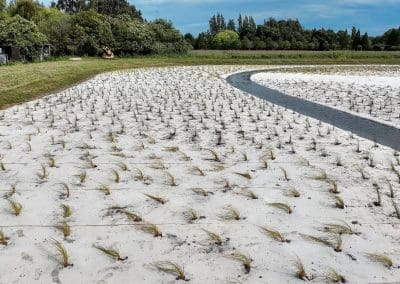
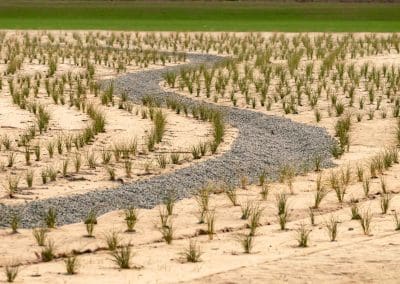
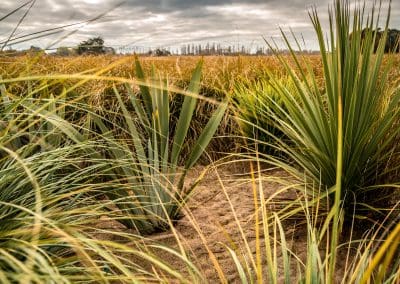
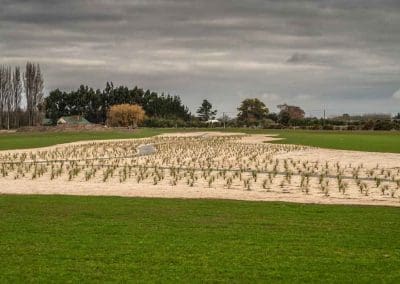
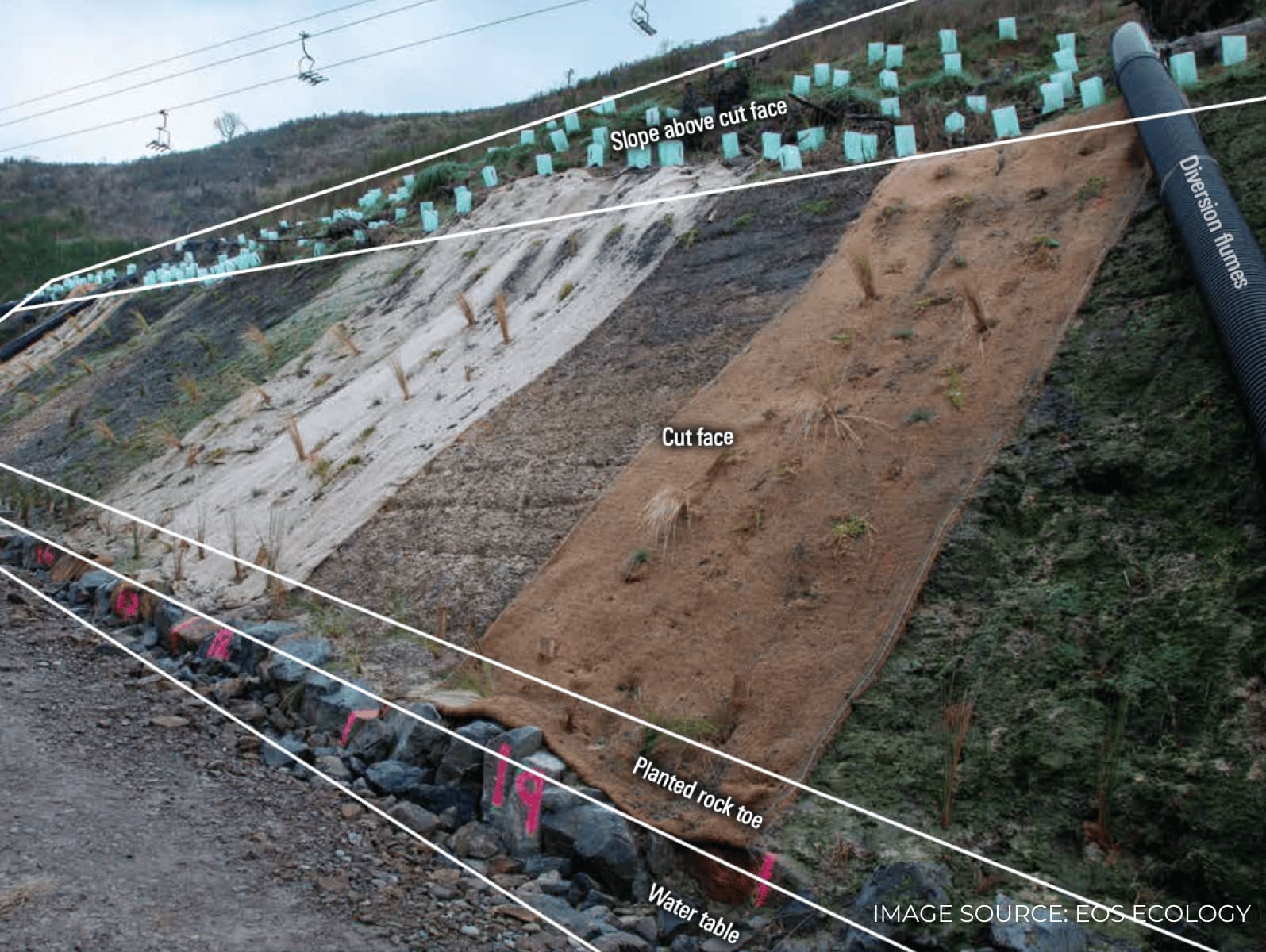
At the Christchurch Adventure Park test area, the team applied three approaches to different sections: rolled products, sprayed hydromulch, and a combination of the two. Terra Lana DagMat Blanket Roll (500 gsm) was one of the rolled products, alongside a jute fibre blanket. Native plants including fescue, cutty grass, tussock and fern were planted and left to establish.
DagMat: strong vegetation cover with no erosion features
‘In the first year, we monitored the site quarterly to track early establishment and product performance. After that, we reduced monitoring to once per year for the next two years.’
The final report, completed in late 2022, showed Terra Lana’s DagMat wool blanket ranked top blanket product overall on loess-dominated grids for vegetation cover and erosion control attributes. By the final monitoring round, 71% of DagMat grids achieved more than 50% vegetation cover on loess-dominated grids, no erosion features were present, and the blanket retained product cover with no loss of blanket integrity (and only early signs of expected fibre breakdown) by the end of the 30 month trial. By comparison, only 19% of the 650-gsm jute blanket grids achieved more than 50% vegetation cover for loess-dominated grids, and product degradation was evident.
For reference: the top-ranked treatment overall was hydromulch on an organic base with seed, while the Terra Lana DagMat Roll ‘wool blanket’ ranked second, and the 650-gsm jute fibre blanket ranked second-worst overall.
Using the findings on site
‘The study wasn’t about prescribing one solution,’ notes Shelley. ‘Different sites and projects will need different approaches depending on access, slope and local conditions. For example, if a site can’t be accessed by machinery, a rolled product might be more practical than a sprayed one.’
For land stabilisation on cut slopes and track edges where access is constrained or long-term cover is the priority, the research confirms that rolled wool blankets can reduce erosion features and support vegetation cover over time, with DagMat performing second overall at this site. The choice between rolled, sprayed or combination systems should be guided by site access, slope and planting method, with a focus on sustained performance beyond the first year.
You can download our DagMat product data and specifications here, or email our team.
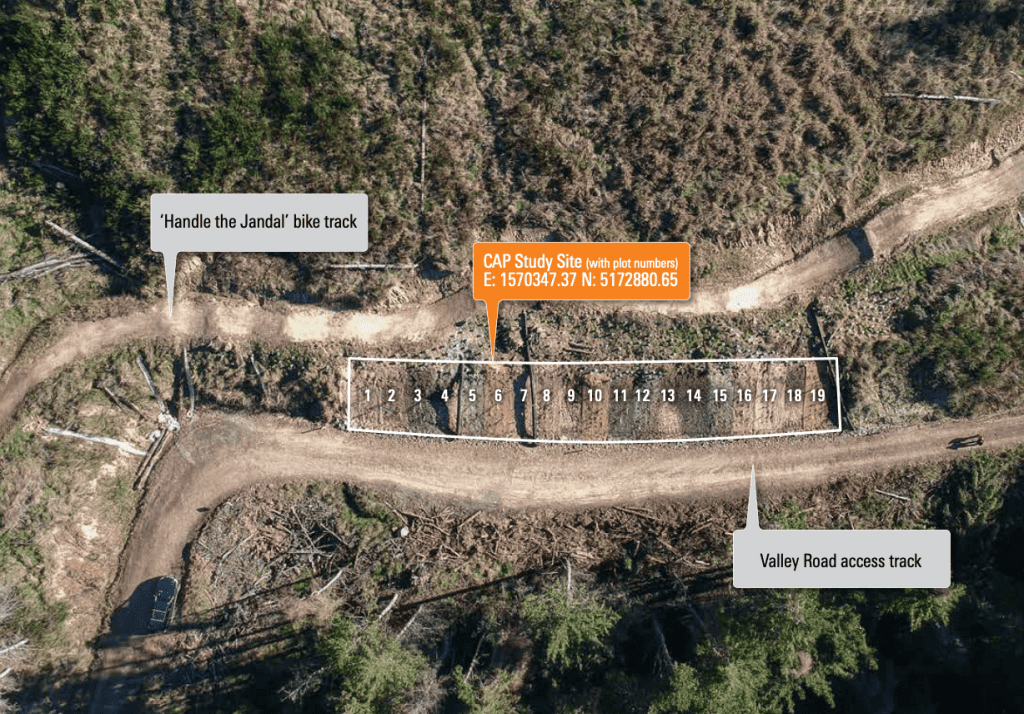
Image: The location of the first cut slope soil erosion study site, located up Valley Road access track in the Christchurch Adventure Park. The individual test plots are numbered. Photo taken shortly after completion of the site setup, in June 2019. Image source: EOS Ecology.
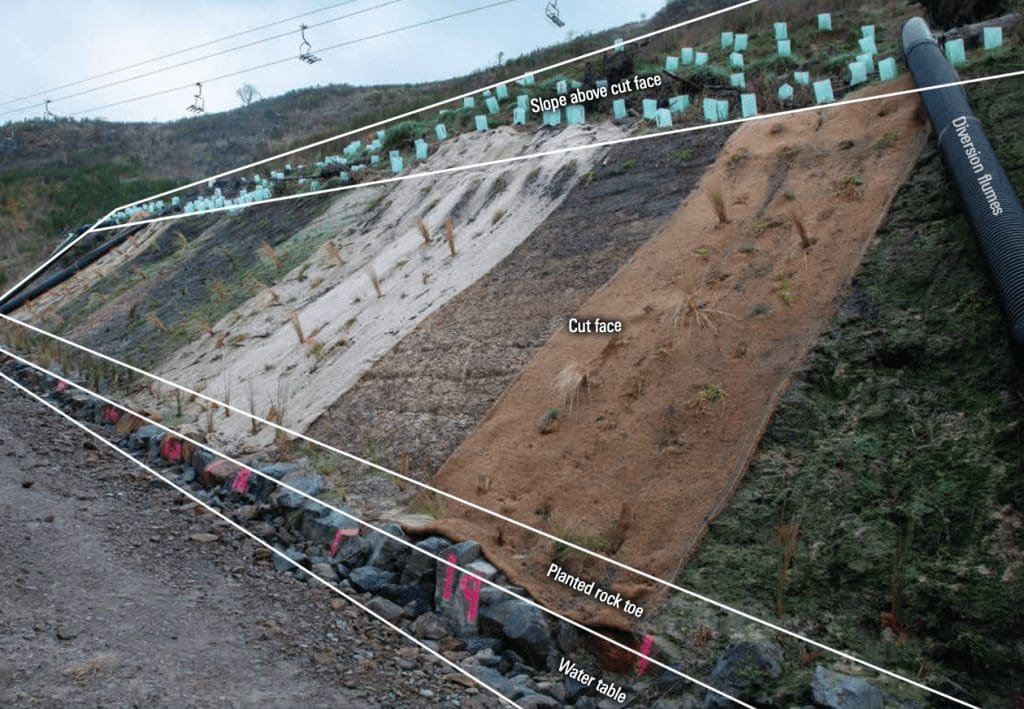
Image: Key features of the study site. Image source: EOS Ecology.
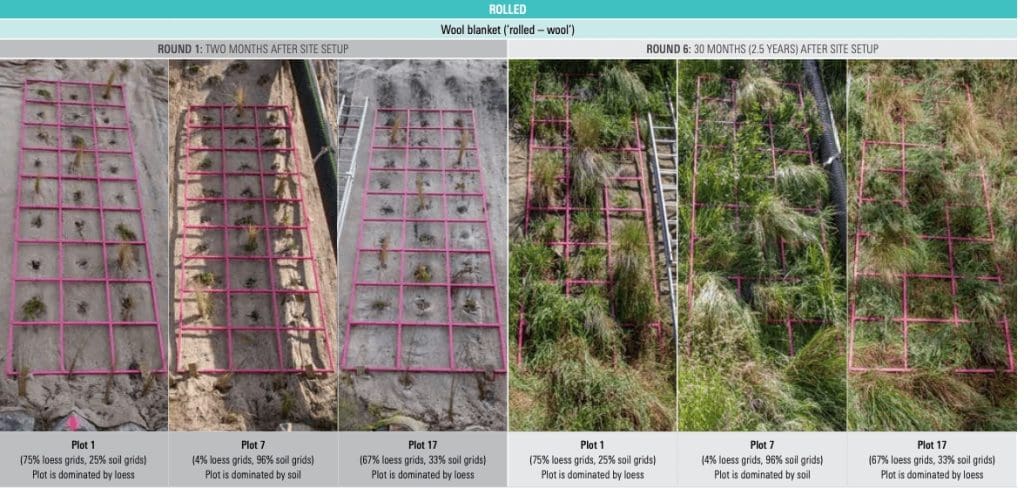
Image source: EOS Ecology.